How the Adobe Learning Summit Has Changed Over the Years
I’ve been writing about the Adobe Learning Summit for a long time now. Some of those posts were simple reminders to mark your calendar. Others focused on venues, schedules, or why the event mattered specifically for Adobe Captivate users. But when you read them together, they tell a much bigger story — one about how the Summit itself has evolved alongside the learning profession.
In its earlier years, the Adobe Learning Summit felt very much like a traditional user conference. The focus was squarely on tools, especially Captivate. Sessions went deep into features, workflows, and practical techniques for building eLearning. For instructional designers and developers working hands-on in authoring tools every day, this was incredibly valuable. The Summit was a place to sharpen skills and learn what was new or coming next.
Over time, though, the conversation began to widen. Captivate didn’t disappear — far from it — but it became part of a larger narrative about learning ecosystems rather than the entire story. Sessions increasingly explored how learning fits into performance, analytics, and organizational goals. The question shifted from how to build content to why that content exists and how it supports real outcomes. Learning stopped being treated as a standalone activity and started being framed as a strategic function.
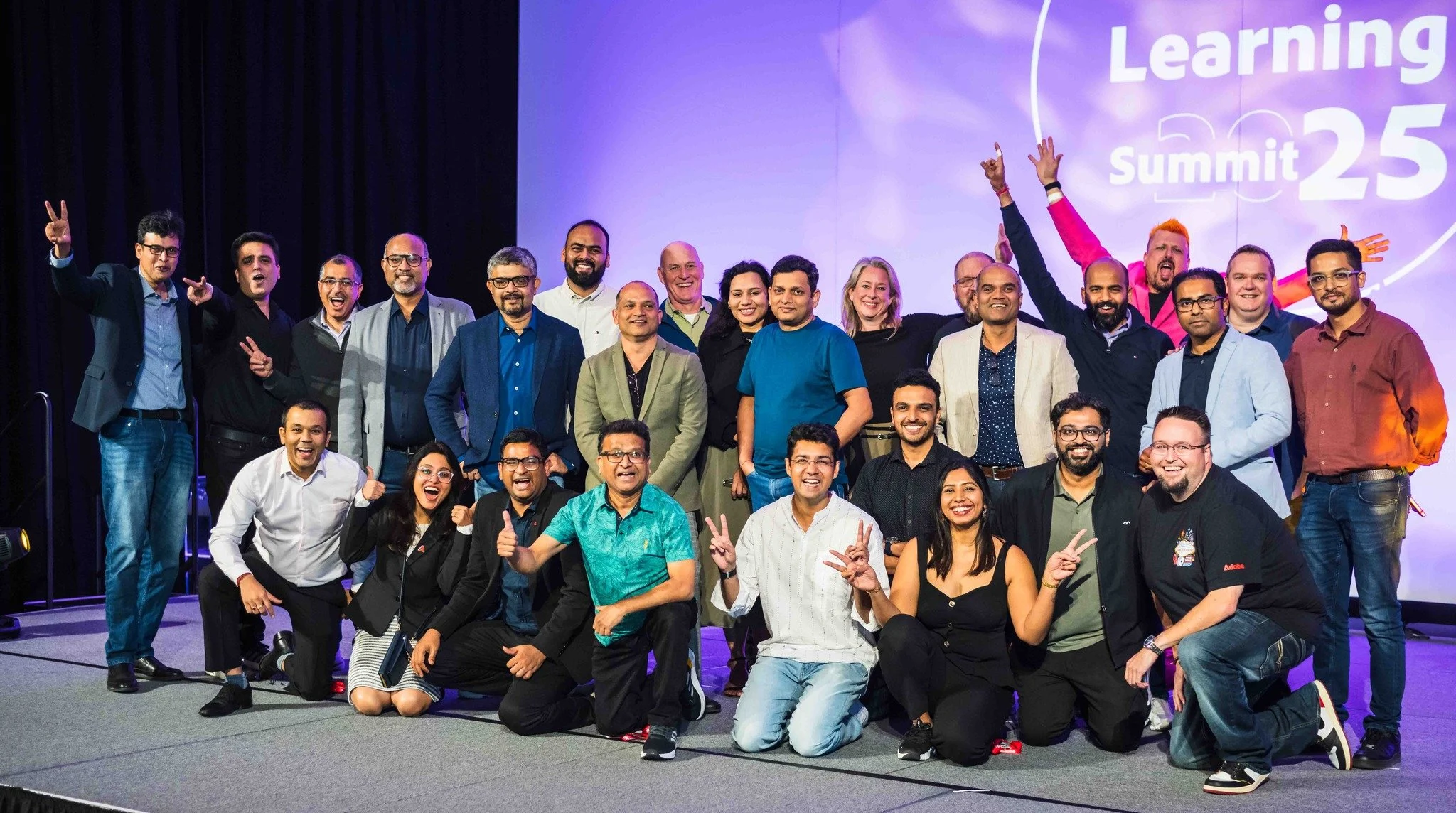
Adobe employees celebrating the Adobe Learning Summit 2025
Along with that shift came a noticeable change in tone. Earlier Summits leaned heavily into demonstrations and how-to sessions. Today, there’s a stronger emphasis on impact. Discussions revolve around effectiveness, scale, and value — not just whether something can be built, but whether it actually makes a difference. The audience has grown beyond developers to include learning leaders, consultants, and decision-makers who care as much about results as they do about tools.
One of the clearest markers of this evolution has been the rise of artificial intelligence as a central theme. In the past, efficiency was often talked about in general terms. Now, AI sits at the heart of the Summit’s messaging. It’s presented as a practical response to the pressures learning teams face every day: tighter timelines, higher expectations, and the need to personalize learning without exploding budgets or workloads. The conversation isn’t about replacing people. It’s about amplifying human judgment with AI-assisted speed and consistency.
This evolution is also reflected in what Adobe now looks for in speakers. In earlier years, deep technical knowledge was often the primary requirement. If you knew the tools well, you had something worth sharing. Today, Adobe is far more interested in real-world stories — how learning was applied, what problems it solved, and what was learned along the way. That shift has made space for first-time speakers and practitioners who may not see themselves as experts, but who have meaningful experiences and insights to offer.
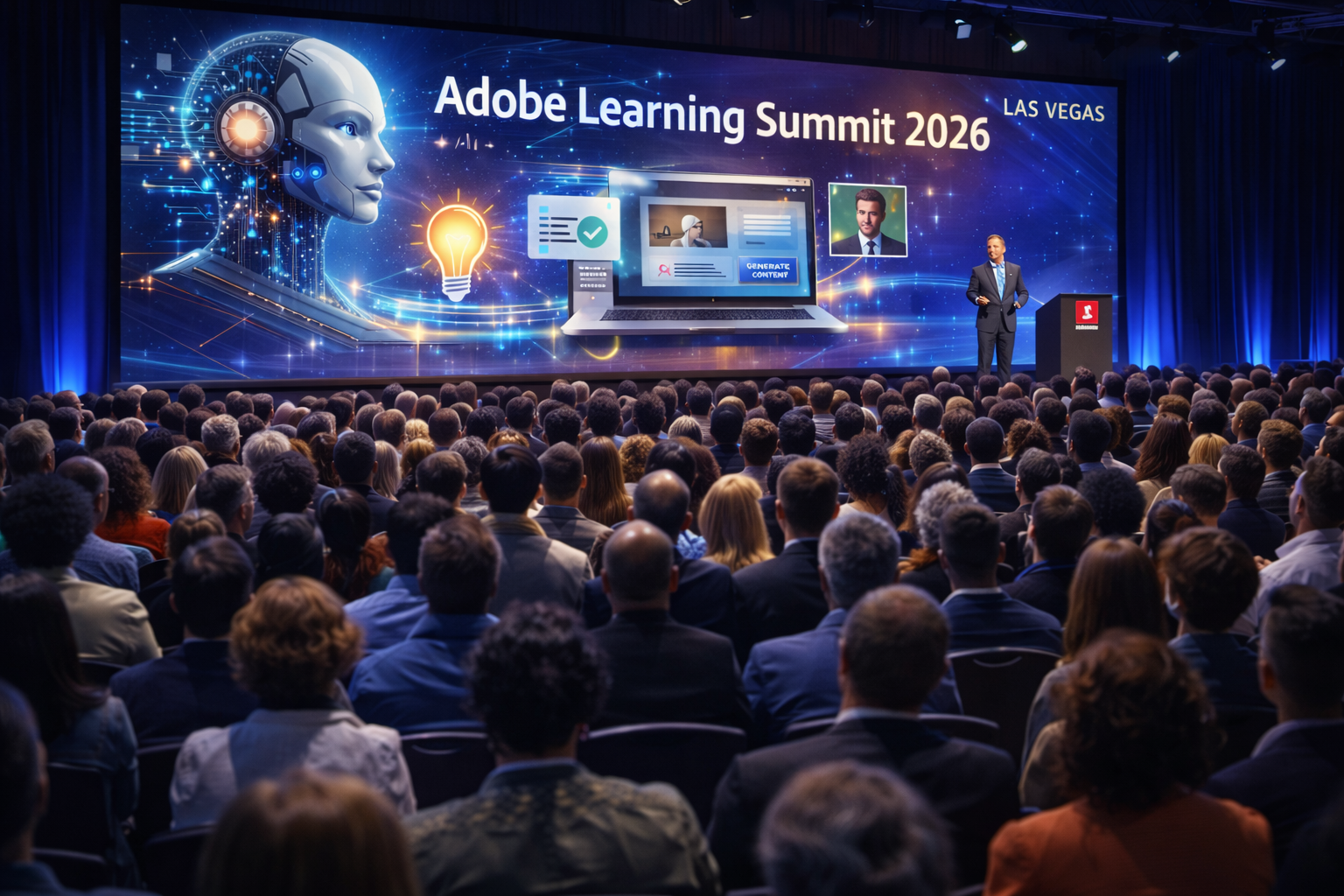
An AI imagined image of what the Adobe Learning Summit 2026 might look like
Even the structure of the Summit itself has become more intentional. Changes to dates, venues, and the way certification days are separated from conference sessions suggest a growing focus on the overall learning experience. Rather than trying to pack everything into a single overwhelming schedule, the Summit feels more deliberately designed, with space for both deep focus and broader inspiration.
Perhaps the most important change, though, is who the Summit is really for. What once felt like an event primarily aimed at instructional designers and eLearning developers now serves a much broader community. New Captivate users sit alongside seasoned professionals. Learning leaders share the same space as hands-on practitioners. Consultants, customer education teams, and talent development professionals all find relevant conversations and takeaways.
Looking back across years of blog posts, the pattern is clear. The Adobe Learning Summit has matured into a future-facing learning event — one that mirrors the evolution of our field itself. It’s no longer just about mastering tools. It’s about understanding how learning supports people, performance, and growth in an increasingly complex world.
And in many ways, that evolution feels familiar. It’s the same journey many of us have taken in our own careers — starting with tools, and eventually learning to see the bigger picture they’re meant to serve.