
Freelance Series — Keeping the Cost of Training Low
One of the biggest challenges a training department has is justifying its existence. In most cases, learning and development only show up on the expense side of the balance sheet. So how do we justify our existence to the powers that be?
One of the biggest challenges a training department has is justifying its existence. In most cases, learning and development only show up on the expense side of the balance sheet. So how do we justify our existence to the powers that be? Here are several strategies that you can include in training to keep the cost low and justify the existence of learning and development to the decision-makers in your organization.
Avoid expensive technology for technology’s sake

Virtual Reality Goggles may be an unnecessary expense
I had an experience a number of years ago with an organization that hired me for consultation. They were really excited about Adobe Captivate’s new virtual reality solution. The designer who wanted to use this new technology was more interested in the technology but didn’t consider if virtual reality lent itself to this situation. The organization purchased several virtual reality headsets for the learners to use when completing this course. This expense wasn’t needed and many in the organization were left wondering why this equipment was purchased.
Don’t reinvent the learning wheel
Some of the requests I get from new or less experienced eLearning developers look something like this…
My eLearning project is due on Monday morning and I promised this really cool interaction that I just can’t figure out. Can you help me get this completed on Sunday evening?
Of course, I help as many people in this situation as I can but I learned much earlier in my career to build what I call an eLearning utility belt. Remember how amazing Batman was at pulling out just what he needed at the moment to solve just about any crime-fighting challenge.
eLearning Superheroes
I spend a certain amount of my week working on new learning interactions. I like to design them in such a way that I can simply copy them from the original project and paste them into any project that requires them. I might spend many hours developing these solutions but can implement them into new projects in a matter of minutes. This greatly decreases my development time but also lowers my stress level. I never promise anything to a stakeholder that I don’t already have in my eLearning utility belt.
Keep learner seat time low
This one can be more challenging but worth it. It usually requires that you manage the expectations of your subject matter experts. Subject matter experts or SMEs are often assigned to you by the stakeholder for a project. These folks know everything about that area of the business. If it was up to them you would teach everything they know and the training would take many days for learners to complete. The reality is that most learners only need to know a small portion of the knowledge that the SME contains. Your eLearning projects should only include the knowledge and skills required to meet expectations. Optional material can be converted to another format. Also, material that would allow learners to take their knowledge and skill to the mastery level that an expert has can be reserved for when the stakeholder funds such a master level training program.
Use job aids whenever possible
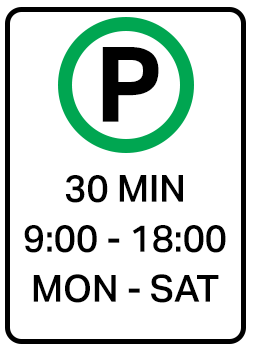
Job aids are a great way to move content into an easy to development format that can be made available in a just-in-time way. My classic example of a parking sign is a good example of this. Sure you can make an eLearning course that teaches employees how to park in and around the various facilities at your organization but a simple parking sign (which is really just a job aid) can eliminate the need for your organization to develop a training course about parking. In this example, the parking sign (job aid) is made available in the exact location where it’s needed and there is no memorization required by your employees. They just need to follow the directions on the sign.
Rely on informal learning
There is some risk in informal learning but if you create a learning culture within your organization you can ensure that informal learning takes place. It can be as simple as giving people supervisory roles within your organization. Setting performance measurements on supervisors to include a certain amount of time in any given week to dedicate to training will ensure that regular employees learn from their mentors. You can develop job shadowing programs for very little expense (if any). Also, check if your organization has material you can already leverage. For example, one organization provided access to LinkedIn Learning. Most employees were unaware of this. By promoting this benefit, many employees will rely on this valuable resource to gain skills not only for their current role but for future positions as well.
Keep track of when learning is successful
Finally make sure that when learning proves to be successful, keep track of those successes. I like to include feedback from employee managers approximately 30-45 days after completing training. I simply ask one question.
How is your employee performing in the area related to the training?
If you can demonstrate that a previous performance gap is now addressed you might even be able to quantify it. For example, if last year there were a certain number of on the job accidents and this year your training has contributed to fewer accidents you can show the higher ups that your training has saved the company the cost associated with an injured employee.

Freelance Series — Working Without a Deposit, Less Than Your Normal Rate or For Free
I've learned from many of the mistakes I've made over the years, and hopefully, with this series of articles, I can help you learn from my mistakes as well. This first article addresses one of the areas of freelance work that many people are uncomfortable talking about — money!
I've learned from many of the mistakes I've made over the years, and hopefully, with this series of articles, I can help you learn from my mistakes as well. This first article addresses one of the areas of freelance work that many people are uncomfortable talking about — money!
When we first start our freelance business, we get our first paid gig and are afraid to ask for a deposit. I think this often comes from a fear of potentially losing this work. Perhaps the client would be insulted that you are asking for money upfront. Make sure you ask for at least 20 percent upfront. As you become more established, you can probably ask for more. Also, consider a higher deposit for overseas clients or something that doesn't feel right. For example, I sometimes get clients using their Gmail or Outlook accounts to communicate with you rather than a corporate domain email address. These emails could be a warning sign that there might be a greater risk with this particular client. Overseas customers are not necessarily a greater risk, but it would be more difficult for you to collect on unpaid work if the client is outside your legal jurisdiction.
It's important to remember that you might be working for a client for a month or two, or even longer. Even when you send the client the final invoice, it isn't uncommon to not send you a payment for 30 days. You still need to make those mortgage payments and buy groceries. Your client will understand this. It is entirely reasonable to expect to have some cash flow during these times.
I recall one of my first clients didn't like the hourly or flat rates I offered. I base my rates on how much I wish to earn during that length of time. Suppose they want only one hour of my time, my rate on what I need to make for that hour. For an entire project, I estimate how long that project will take and decide how much I want to earn for that period. This client was shocked at how much it was going to be. I reminded them of my unique skills and made sure they understood how long working on such a project would take. I reluctantly agreed to work for less.
It turns out the project's scope was more significant than they let on (more on scope in a future article). Additionally, the client was slow to provide materials and feedback. Finally, when I was finished the project, the client was slow to pay.
When considering lowering your pricing, always assume that you may have these sorts of pitfalls. Also, you may have to turn away other business at full price if it comes while you are busy on this discounted work. That didn't happen to me, but it's something I always think about when someone asked for a reduced rate. More often than not, I decline the work.
Another issue I have run into is the request for free mentoring or consultation. People assume that as someone active on social media, a company like Adobe might be paying my bills. This is not the case. I only earn what clients pay for my services like instruction or consultation. I do give away my knowledge in the form of sharing on social media like YouTube and Twitter. I've learned that I need to be careful not to fall into the trap of giving too much of myself away for free.
I sort of have an informal decision-making process when asked to help someone for free.
Can I answer this question or offer support in half a dozen sentences or less in an email? If yes, I reply with a simple answer and a statement that if they need more assistance, they can purchase an hour of consulting or instruction from my website.
Could I answer this question by creating a new video for my YouTube channel and promoting my services in the process? If yes, I will make a video and send the link to the person who originally asked. I only pick questions and solutions that have a broad appeal. You wouldn't believe how out of this world some questions can be. It doesn't help me if they are the only ones watching the video.
Is this person asking me to provide a free service that I presently sell to other clients? If yes, the answer will almost always be no. Imagine what your paying clients would think if they found out that you gave away services that you charge them many hundreds or thousands of dollars. People asking me to jump on a Zoom call to help them without paying need to be educated on what I do. I am not on retainer by Adobe or anyone else in the eLearning industry. The only money I get is the money people pay me to help them learn about or create eLearning.
Generally, I do try to help as many people as I can. Some people even play the starving student card. I am immune to this. Don't forget I have given thousands of hours of my time creating free YouTube videos and writing articles like this one. We each need to set boundaries on how much of ourselves we give away. Consider the thousands of hours we have all spent becoming the experts we are. That has to be worth something.
What I Learned Going Freelance
I got a request from another professional on LinkedIn to provide some advice to someone considering going freelance in the learning industry. I don't know if I have any secret formula for making it on my own, but I can share my personal experience.
I got a request from another professional on LinkedIn to provide some advice to someone considering going freelance in the learning industry. I don't know if I have any secret formula for making it on my own, but I can share my personal experience.
I was working at the Toronto International Airport as an eLearning Designer, Developer, and after five years, my contract concluded. Rather than looking for the next company to work for, I decided to start my own consulting business. I knew that my employment was ending about three or four months beforehand, so my wife and I had time to save up some extra money. You won't always have the foresight that I did, but if you think you might want to go freelance, this is something you need to consider. The day you start your freelance business will be the scariest of all. Your bank balance will likely not increase, and it will probably get sizably smaller.
Here are some of the expenses I had upfront that I can recall. I'm sure I forget some of them, but these were the main ones.
new laptop
software for a new laptop
office furniture
equipment to make YouTube videos (more on that later)
website
domain name registration
government sales tax registration
master business license (differs depending on your location)
business cards
Of course, I still had all the various household expenses that a typical family has to continue to pay.
My first problem was that I didn't know where I would find potential clients. I had worked for precisely two companies in learning and design, but the rest of the world didn't know who I was. I figured I needed to become well known to be successful in this industry. I started making YouTube videos about Adobe Captivate, the eLearning authoring tool that I use. I intended to clearly show that I knew the software well enough to have expert tutorials on YouTube. I hoped that someone looking for an eLearning developer would find my videos and reach out to hire me to have me build their eLearning for them.
This strategy did work, and I started to get clients to reach out to me for eLearning design and development jobs. There were two problems upfront. The first was that while I was working for the first client, I wasn't looking for client number two or three and so on. When it's just you, momentum can be a problem. The second problem was that my YouTube videos were generating questions from all these viewers. They had every conceivable question about the software you could imagine. I tried my best to help each person, but it was getting in the way of getting more paying clients. What I didn't realize right away was there was an opportunity to pivot my business model, if only slightly. I realized that some of these people asking questions might be willing to pay me to provide one-on-one instruction. I changed my website from https://paulwilsonlearning.com to https://CaptivateTeacher.com and started promoting that I offered both design and development services as well as the one-on-one instruction.
As I approach the fifth year of my freelance eLearning business, I feel comfortable enough to not worry too much about where my next client will come from. A couple of things of note is that while I was not the first person on YouTube to teach people about Adobe Captivate, I am the most consistent. I have posted at least one video per week for five years, and my audience has grown from just a few views to over 1.5 million views. Each year that I have been freelance, Adobe themselves have invited me to attend and speak at the Adobe eLearning Conferences in Washington DC as well as Las Vegas. For the last several live events, I have been an instructor for their Adobe Captivate Specialist certification class.
So I guess my main message to anyone starting their own business is that some of your opportunities might be disguised as something else. Please don't ignore these other opportunities. I quickly learned that ignoring these other opportunities could be overlooking a potential new revenue stream. It might seem at first that these other opportunities would get in the way of your main goals, but I can attest that your primary goals will still be there. My main goals might not be my main goals anymore. I now have revenue streams from teaching classroom courses, one-on-one classes, design and development work, and the YouTube channel has become very profitable as well. I used to say that the ad revenue from YouTube was enough to buy a pizza every couple of weeks, but I can no longer say that. Today I now measure it in vacations to Mexico for my wife and me to enjoy.